
The age-old question: buy or rent a home? But… what’s the best option in 2026?
The bad news: there’s no single answer.
The good news: if you’re clear about your goals and your financial situation, it’s much easier to decide between renting and buying.
Let’s first break down the case of housing and then look at buying or renting other properties such as commercial spaces, warehouses, offices, and storage units.
Finally, we’ll discuss what’s best according to the 2026 forecasts.
Buying or Renting a Home: What to Choose in 2026
When choosing between buying or renting a home, it’s important to consider the advantages and disadvantages of each option to make the best possible decision. Let’s get started!
| Advantages of Buying | Advantages of Renting |
|---|---|
| Building wealth. Owning a home can be your “savings bank” for retirement, to help your children, or to sell and move to another house. In any case, it’s an asset that’s in your name. While renting doesn’t build wealth, if you spend 15-20 years paying rent, you’ll have paid the equivalent of a home without owning it! | Risk of buying poorly. Buying a home is building wealth unless you choose the wrong area, pay too much, or don’t properly check the property’s condition. |
| Payment stability. If you need a mortgage and choose a fixed-rate mortgage, the monthly payment will remain the same until the loan is paid off, without the fluctuations that can occur with rent increases. | You need less initial savings. To buy a home, banks typically lend a maximum of 80% of the property value, so you need to have saved the remaining 20% plus 10% for closing costs (notary fees, registration fees, taxes, etc.). With renting, the expenses are reduced to the first month’s rent plus a two-month security deposit, something similar. |
| Freedom to renovate. Would you like to combine two bedrooms? Create an open-plan kitchen? Do whatever you want, it’s yours and you don’t have to ask the landlord for permission because it’s you! | Fewer structural maintenance worries. When you rent, you don’t have the freedom to renovate, but you also don’t have to worry about special assessments for major repairs like roofs, downpipes, etc. |
| Lower energy costs. In some cases, if the purchase is of a new build, it will likely comply with the energy certificate and therefore you will enjoy a home with insulation, thermal comfort, and therefore lower utility costs. See new build homes in Valladolid here. | No fixed annual expenses. When you own a home, you don’t run the risk of your monthly payment changing like with renting, but you do have fixed annual expenses such as property tax (IBI), home insurance, and monthly expenses like homeowners’ association fees. |
| Cheap opportunities. Yes, they exist. If you’re looking for a good price, you can check out cheap bank-owned properties in Valladolid, it might be the buying opportunity you’re looking for. | More freedom to change your address. If your job moves to a different city, you’re offered a transfer, or you simply get tired of the neighborhood, it will take longer to sell your house than to leave your rental. |
Conclusion:
If you’re looking for long-term stability and wealth growth, buying a home is the best option.
If you’re looking for something that doesn’t tie you down, renting offers the flexibility of a long-term rental. We encourage you to browse our apartments for rent in Valladolid.
In any case, before making a big decision, you can always talk to Ker2000. We can advise you on any concerns or questions you may have.
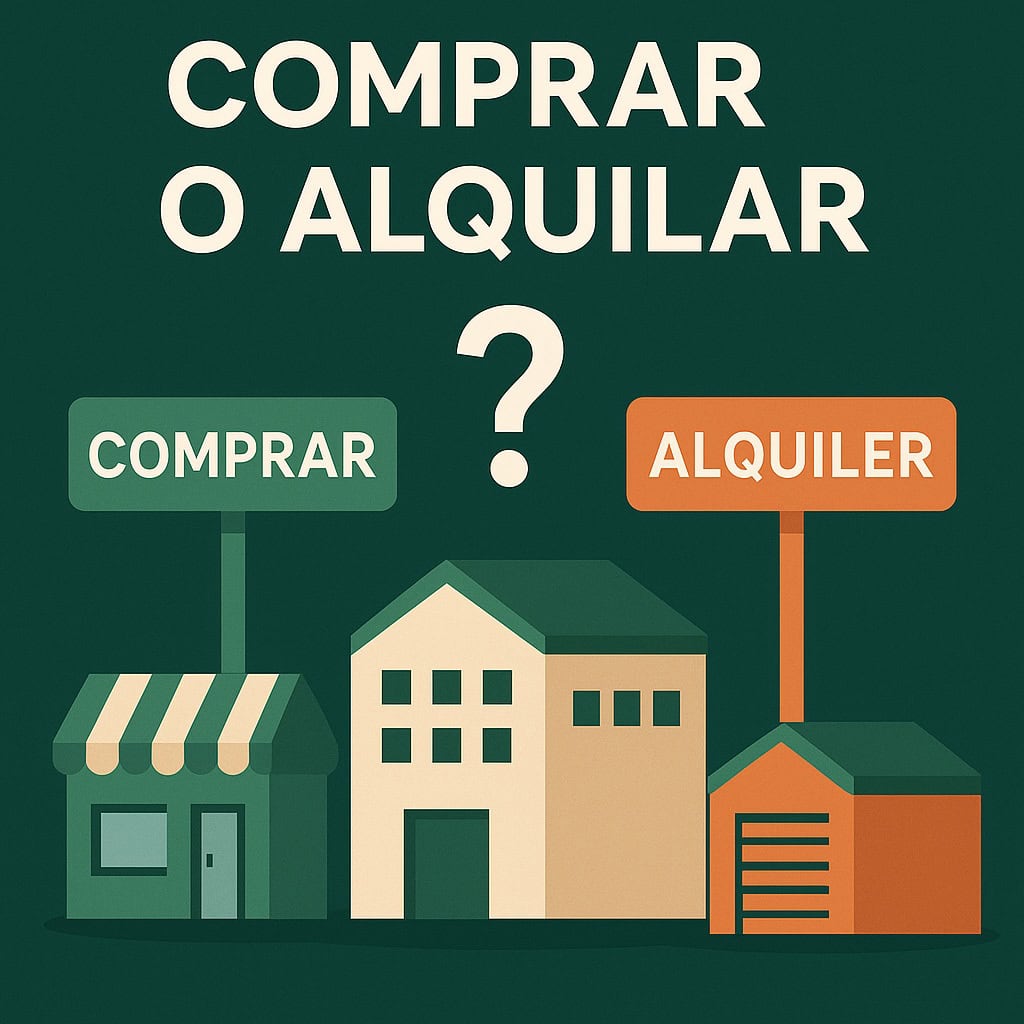
Buy or rent other properties: premises, warehouses, offices and storage units
The question “buy or rent” does not only apply to housing. If you own a business, are self-employed, or need extra space, you’ll also consider:
- Commercial premises
- Industrial warehouses
- Offices
- Storage units
The logic is similar, but with important nuances:
| Advantages of buying | Advantages of renting |
|---|---|
| COMMERCIAL PREMISES
If your business is established. If you’ve been operating your business for several years, it’s well-established, and you know it will be successful in that area, the best option is to buy outright. |
COMMERCIAL PREMISES
If you’re an entrepreneur or exploring a new area. If you’re testing a new business model or seeing how well your business might perform in a particular area, the best option is to rent. If it’s successful, then you can consider buying. |
| WAREHOUSE / STORAGE UNIT
If you need a lot of space or anticipate needing it. If your business requires a very specific location and you’re going to need a lot of space, the best option in these cases is to buy. Either a large storage unit or a warehouse, whichever suits your needs. |
WAREHOUSE / STORAGE UNIT
If you’re starting out or your space needs vary. If you’re an entrepreneur starting a business, the best option is to begin by using a self-storage service (e.g., storage unit rental) or renting a small warehouse, allowing you to scale up or down as your business grows or if your business experiences seasonal fluctuations. |
| OFFICE
If you have a large staff or receive visitors. If you have a stable team, receive client visits, and carefully manage your brand image, buying is the best option. |
OFFICE
If you are a freelancer, salesperson, or similar. If you work remotely, find coworking appealing, are a salesperson and spend more time in the field than in the office, or simply prefer spaces that you can expand or reduce as needed… renting is the best option. |
What’s better, buying or renting a home/property in 2026?
In 2026, with interest rates somewhat more moderate than at their peak in 2023–2024 but still higher than the previous decade, it’s not always accurate to say that buying is better than renting. If you have a stable income, savings for a down payment (20–30% of the price), and plan to stay in the same city for at least 7–10 years, buying is usually better in the long run because part of the mortgage payment will build equity and protect you from future rent increases.
On the other hand, if your job or city might change, you have little savings capacity, or you’re worried about taking on long-term debt, renting remains a more sensible option: you pay for usage, you’re not tied down, and you have the flexibility to move, even if you don’t build equity in the long run.
As you can see, in 2026, not much changes with respect to the reasoning we’ve presented throughout this article.
Useful Tools About Buying or Renting
And if you’ve read this far, here are some useful tools:
Podcast | Rent or Buy? The Real Estate Market Paradox in 2025.
Listen to the Financial Health podcast by Félix Lores, economist at BBVA Research:
Find out if buying or renting is better for you using this Bankinter simulator:
See the simulator to find out if buying or renting is better for me